Surfboard Fin Manufacturing: How to Avoid the Injection Trap
You might browse Swaylocks archives often. Additionally, you might read hardcore surf hardware subreddits. If so, you know the surfboard accessory market has two distinct worlds. First, you have high-volume injected composites. Second, you see premium, hand-foiled glass fiber (GFK).
Boutique surf shop owners and brand founders often make a costly mistake. However, this mistake is not choosing the “wrong” material. Instead, they pick the wrong manufacturing method for their specific business stage. For example, some procurement managers drain their cash flow quickly. They sink massive capital into steel injection molds for an unproven fin template. As a result, they destroy their brand’s ability to iterate.
You want to turn a paper sketch into a solid return on investment (ROI). Therefore, you must understand factory-floor realities. Specifically, you need to know about zero-tooling GFK routing and high-volume injection molding. Here is an objective industry breakdown.
1. The Tooling Matrix: When to Route GFK vs. When to Inject
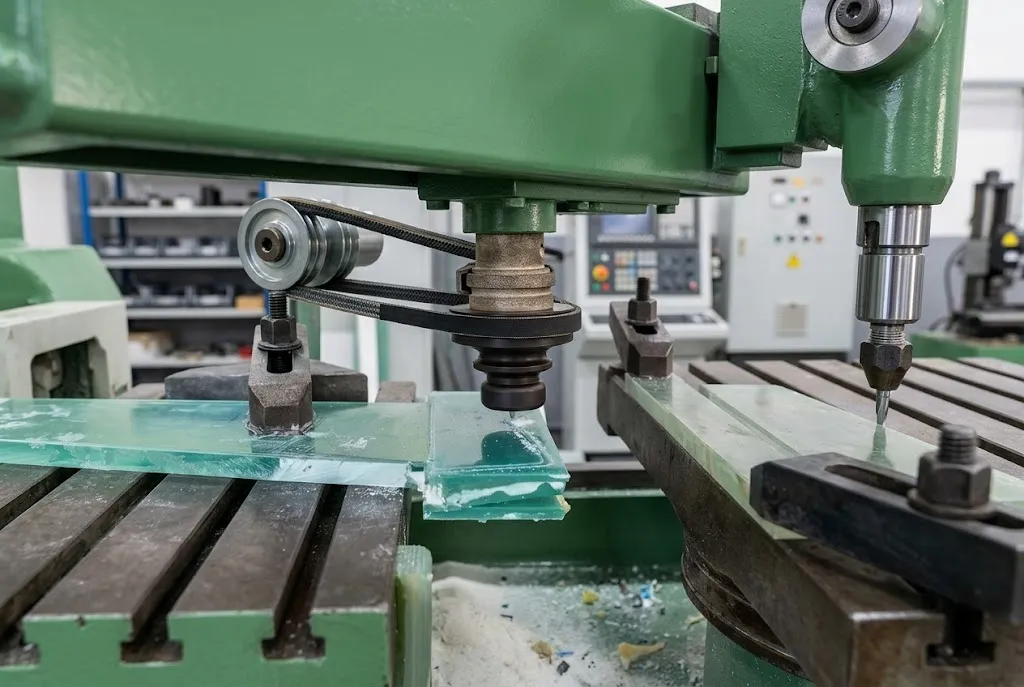
Brands must allocate tooling capital carefully. Strategic procurement does not simply pit plastic against fiberglass. Instead, it matches the process to the product lifecycle.
The Prototyping Tier: Zero-Tooling GFK When launching a new twin fin, agile manufacturing is crucial. Professional shapers know a key fact. True GFK fins come directly from solid resin panels. First, there are no molds involved. Top factories use basic 2D CNC routers. These machines cut the flat outline directly from the panel. Consequently, brands avoid sunk costs. Furthermore, they gain agile iteration. Brands can order 50 test sets today. Next week, they can tweak the base width. They do this without paying mold modification fees. Thus, this remains the industry-standard path for premium drops.
The Scaling Tier: Injection Molding Eventually, a GFK prototype proves itself as a best-seller. At this point, brands invest in steel molds for plastic injection. Indeed, injection molding dominates high-volume production. It provides massive profit margins for entry-level replacements. Moreover, everyday riders demand durable flex patterns. They want this without the premium hand-foiled price tag.
2. Bypassing 3D CAD: From Sketch to Factory Floor
The initial design phase should never become a technical nightmare. Traditionally, legendary board builders design custom hardware using visual instinct. They do not use complicated 3D STEP files.
Sometimes, a factory demands an exact 3D computer model. Consequently, they create a massive technical friction point. However, leading manufacturing partners bridge this gap easily. They translate standard paper dimensions directly into production specs. For instance, an engineering team only needs a scanned sketch. Specifically, they need height, base length, and rake angle measurements. Then, they program the initial CNC routing paths. Therefore, skipping expensive freelance drafting fees keeps the prototype budget lean.
3. The “Humming” Fin: Trailing Edge Dynamics Explained
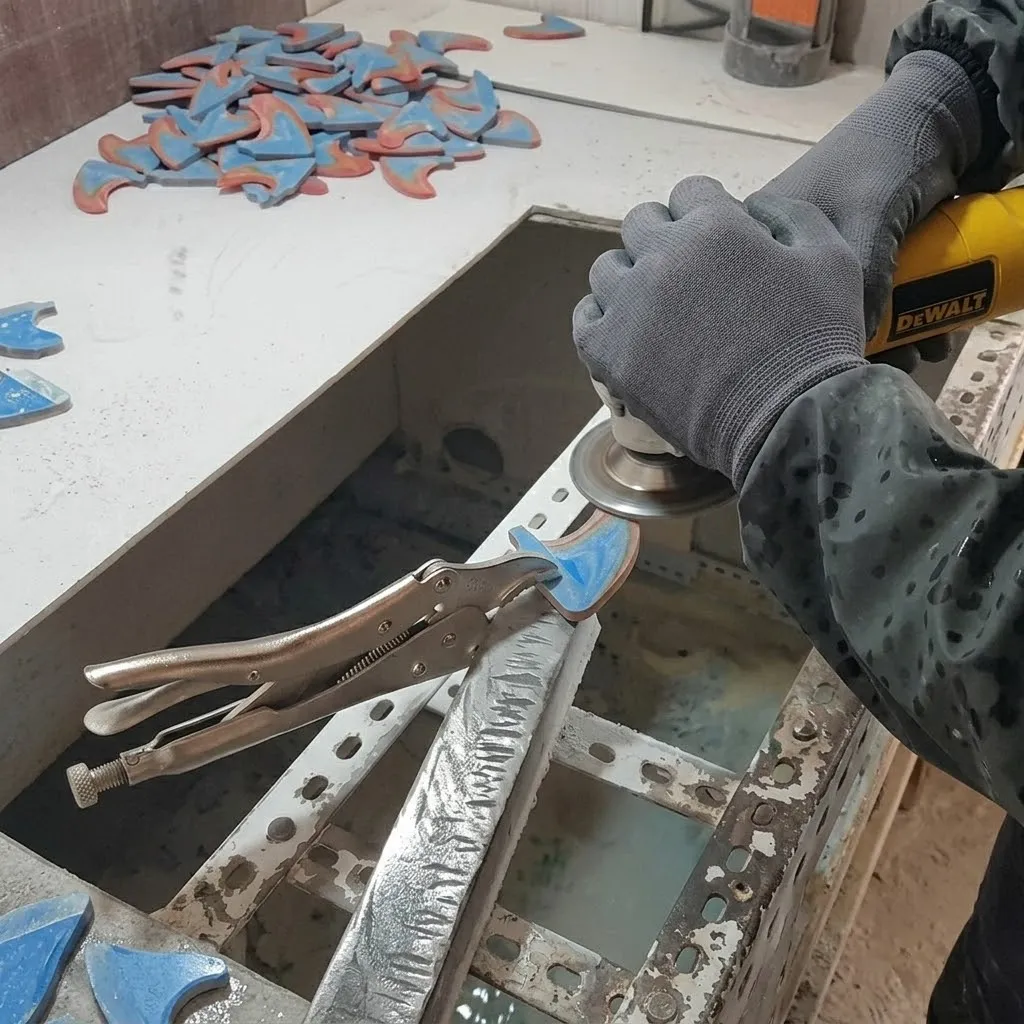
Retail customers sometimes complain about buzzing hardware. Specifically, their fins “hum” during a heavy bottom turn. However, this is not a complex hydrodynamic mystery. Instead, it means the factory finished the trailing edge poorly.
This vibration happens across all materials if factories cut corners.
- Injected Fins: Poorly maintained molds leave a microscopic parting line. Therefore, premium injected fins require tight mold tolerances. Furthermore, they need proper deflashing protocols to ensure smooth water release.
- GFK Fins: CNC machines leave a blunt edge. Therefore, the true magic of GFK relies on the belt sander. Dedicated craftsmen manually taper the asymmetrical foil. They spend minutes hand-polishing the trailing edge. Consequently, they remove any resin bead. This creates a razor-sharp finish. As a result, the fin slices through water silently.
4. The Fin Box Nightmare: Mastering 0.2mm Tolerances
Surf shop owners face a major hardware headache. Customers return products because the fins fail to fit standard boxes. In fact, tolerances for modern connection slots are brutally unforgiving.
For example, a base tab might be 0.2mm too thick. If a surfer forces it, they crack the surfboard’s fiberglass. Conversely, the tab might be 0.2mm too thin. Consequently, it wiggles and rattles. This instantly kills the board’s forward drive.
Strict Factory Tolerances: Sloppy factories destroy expensive boards. Therefore, the industry standard relies on rigorous digital micrometer checks. For GFK, expert finishers manually adjust the final polish. This step compensates for the natural micro-shrinkage of curing epoxy. Meanwhile, engineers calculate precise shrinkage for injected composites. They build these calculations directly into the steel mold. Ultimately, aftermarket accessories must slide perfectly into standard slots. This satisfying fit builds trust.
5. Engineering Flex: Marine GFK vs. Composites
Choosing the correct material dictates the flex profile. Furthermore, it determines your target demographic.
- Premium Marine-Grade GFK: Factories use layered marine fiberglass and UV-stabilized epoxy resin. As a result, this creates a highly responsive flex pattern. Craftsmen concentrate material thickness near the base. Then, they hand-taper the tips. Consequently, GFK provides advanced riders with massive forward drive.
- High-Impact Plastic Composites: Manufacturers blend engineered polymers with fiberglass particles. This mixture provides a more uniform, forgiving flex. Furthermore, these composites resist impacts incredibly well. Therefore, they remain the perfect choice for reef breaks and beginner soft-tops.
6. Retail Kitting: How Packaging Boosts Margins
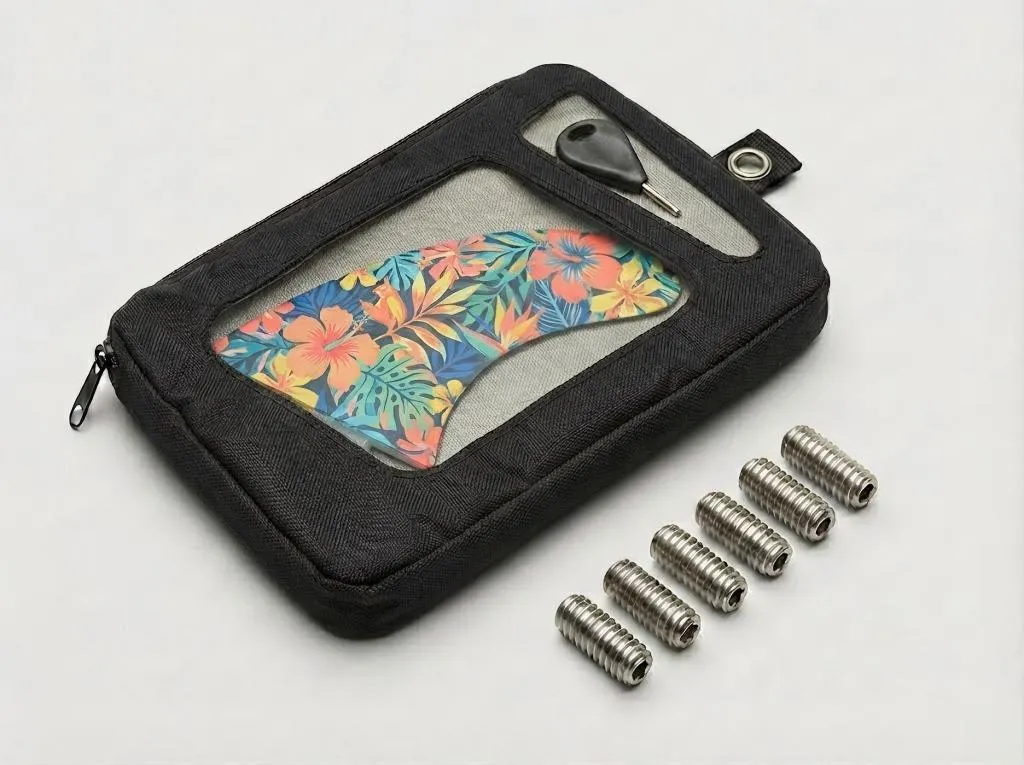
A perfectly engineered fin loses its premium appeal quickly. This happens if you hand it over in a cheap plastic bag. However, upgrading the presentation transforms a basic accessory. It becomes a high-end luxury purchase.
Retail shops easily increase their profit margins. They simply kit hardware inside branded cardboard presentation boxes. Furthermore, they include snug EVA foam inserts and metal keys. Smart procurement managers understand this pricing strategy. Premium packaging costs mere cents at the factory level. Yet, it adds real dollars to the retail price. Additionally, custom foam inserts protect fragile trailing edges. They prevent damage during turbulent international air transit.
7. Lean Inventory Logistics: The Air Freight Advantage
Surf fins are physically small and lightweight. Moreover, they carry a high retail value. Therefore, they are perfect candidates for expedited shipping methods.
Smart brands never tie up critical operating capital. They refuse to wait 40 agonizing days for ocean freight. Instead, they use Direct Duty Paid (DDP) air express. This service brings test batches straight to a storefront door. Typically, it takes just 5 to 8 days. Consequently, store managers restock hot-selling items immediately. They stop guessing seasonal demand months in advance. As a result, they keep backroom inventory lean.
8. Conclusion: The Smart Path to Proprietary Hardware
Launching a proprietary hardware line requires strategy. Successful brands use the agility of GFK panels first. They test new shapes and refine hydrodynamics. Next, they leverage the scale of precision injection molding. They use this for their proven best-sellers.
In conclusion, brands must demand strict micrometer tolerances. Furthermore, they need razor-sharp trailing edges. Finally, they must utilize fast air freight logistics. By doing this, modern surf brands scale predictably and protect their profit margins.
Frequently Asked Questions (FAQ)
Can I prototype a new design without paying for a mold? Yes, you certainly can. The industry standard uses solid GFK resin panels. A CNC machine cuts the outline directly from a flat sheet. Therefore, you pay zero upfront tooling costs. Brands only invest in steel molds later.
Why do some fins hum or vibrate in the water? A poorly finished trailing edge causes this humming noise. In cheap injected fins, excess mold flash causes the vibration. However, in machined GFK fins, a blunt resin bead creates the issue. Top factories eliminate this problem completely. They use expert hand-foiling to create a smooth water release.
Do you guarantee fin bases will fit standard FCS boxes? Loose hardware causes severe stress cracks. Therefore, industry-leading teams use strict digital micrometer checks. They measure every single base tab before packaging. Consequently, this ensures a snug fit across all material types.
Is 3D CAD required to submit a custom hardware design? No, you do not need 3D CAD. Independent shapers avoid hiring expensive freelance engineers. Experienced factories translate standard PDFs directly into CNC routing instructions. Specifically, they only need height, base width, and rake angle measurements.
Does air freight make financial sense for small fin batches? Absolutely. Fins feature a high value-to-weight ratio. Therefore, using DDP air express accelerates the cash conversion cycle. It allows brands to receive products in days. As a result, retail operations remain highly agile.
