How to Choose Surfboard Fins: Size, Setup & Material
Introduction
Surfboard fins may look small, but they have a strong effect on how a board feels in the water. The right fins can help a board feel faster, more stable, easier to turn, or more responsive.
However, fin selection can feel confusing at first. There are different fin boxes, sizes, setups, materials, and shapes. Also, a fin that works well on one board may not feel right on another.
Therefore, it is better to choose fins step by step. Start with the fin box. Then check the setup, size, wave type, shape, and material. After that, you can think about color, logo, and packaging.
This guide explains how to choose surfboard fins in simple terms. It is useful for new surfers, experienced riders, surf brands, distributors, and board builders who need clear product information.
1. Check the Fin Box First
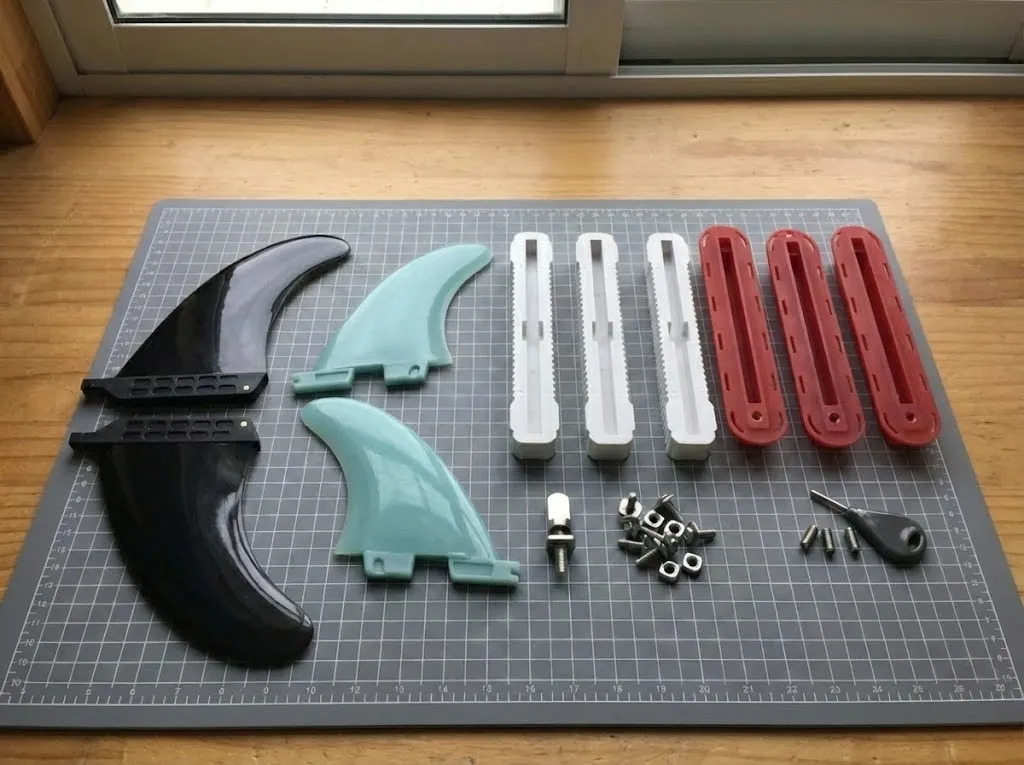
Before you compare color or material, check the fin box. The fin box is the slot or system on the surfboard where the fin is installed.
If the fin base does not match the fin box, the fin will not fit. As a result, even a good fin becomes the wrong choice.
Common fin box types include dual-tab style boxes, single-tab style boxes, longboard center boxes, and removable fin systems for softboards.
| Fin Box Type | Common Use | What to Check |
|---|---|---|
| Dual-tab style | Shortboards, softboards, all-around boards | Base shape, tab position, screw fit |
| Single-tab style | Shortboards and performance boards | Base length, locking fit, installation feel |
| Longboard center box | Longboards and 2+1 setups | Base length, screw plate, center box fit |
| Softboard removable system | Beginner boards and rental boards | Safety, durability, easy replacement |
For one surfer, the easiest way is to remove an old fin and compare the base shape. If the board is new, check the fin box before buying replacement fins.
For brands and OEM programs, base accuracy is also important. Small differences in base thickness or screw-hole position may affect installation. Therefore, these details should be confirmed before bulk production.
2. Choose the Right Fin Setup
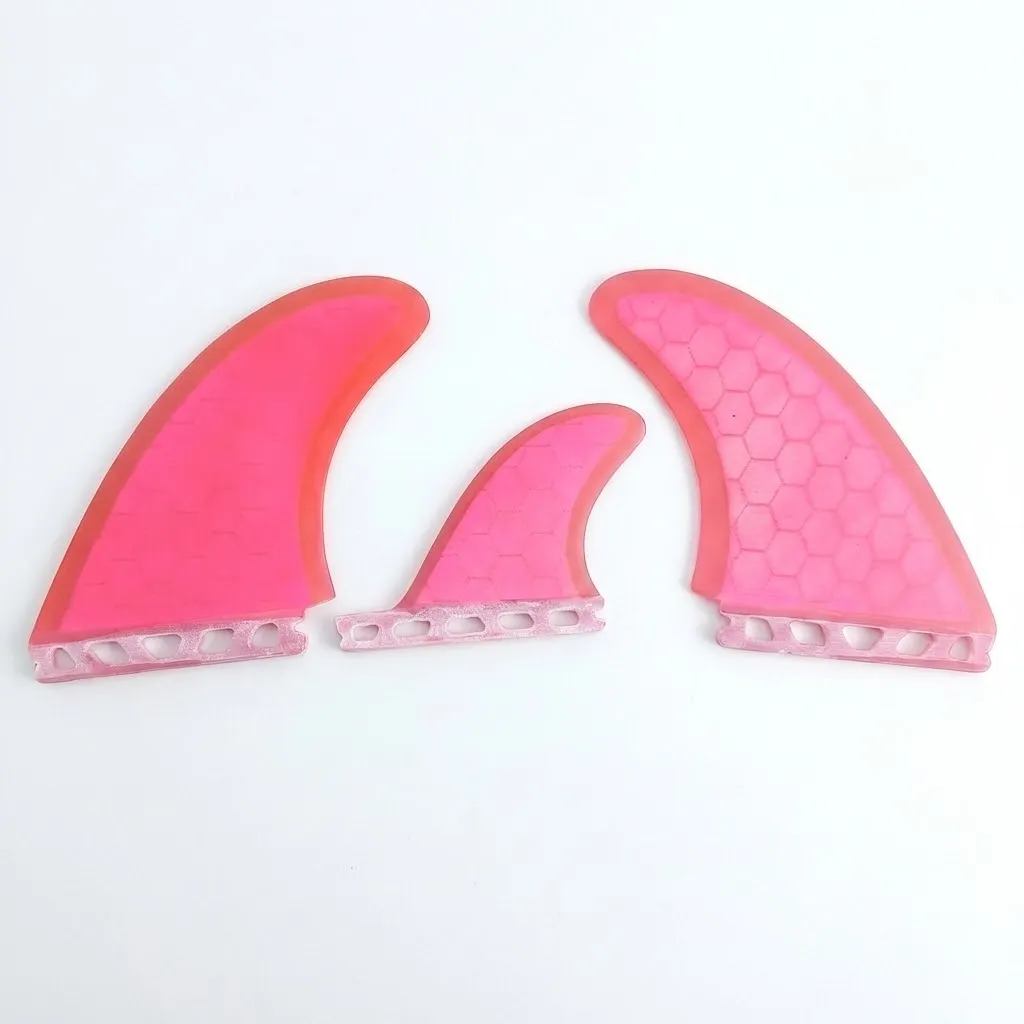
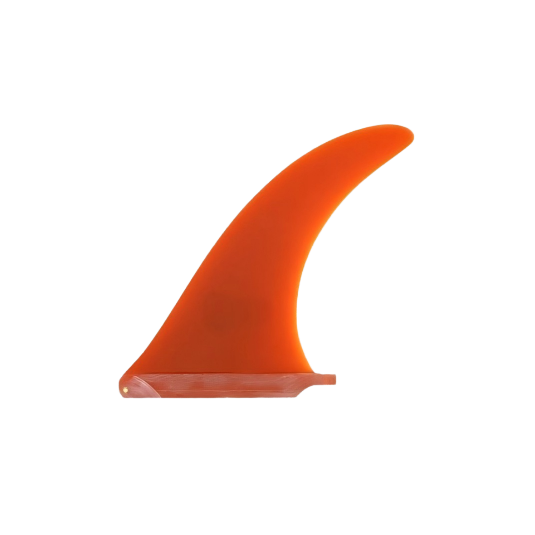
A fin setup means how many fins the board uses and where they are placed. This affects speed, control, turning style, and stability.
The most common setups are single fin, twin fin, thruster, quad, and 2+1.
| Fin Setup | Simple Meaning | Common Use |
|---|---|---|
| Single fin | Smooth and classic | Longboards, retro boards |
| Twin fin | Fast and loose | Fish boards, small waves |
| Thruster | Balanced three-fin setup | Shortboards, all-around surfing |
| Quad | Fast with extra hold | Small waves or stronger waves |
| 2+1 | Center fin with side fins | Longboards, funboards |
A thruster setup is a popular choice because it gives a balance of control, drive, and turning ability. Therefore, many surfers use thruster fins as an everyday setup.
Twin fins usually feel faster and looser. They work well on fish boards and retro shapes. However, they may feel less stable for beginners in strong waves.
Single fins are common on longboards. They create a smooth and flowing feeling. In contrast, they are not usually used for sharp, fast turns.
For product planning, different setups serve different users. A complete fin range may include thruster sets, twin fins, single fins, and replacement fins for softboards.
3. Match Fin Size to Rider Weight
Fin size should match the rider’s weight, board type, and surfing style. In general, heavier surfers need larger fins. Larger fins give more hold and drive.
On the other hand, lighter surfers often prefer smaller fins. Smaller fins are easier to turn and release.
| Rider Weight | Suggested Fin Size | General Feeling |
|---|---|---|
| Under 55 kg / under 120 lbs | XS or S | Easier turns, looser feel |
| 55–70 kg / 120–155 lbs | S | Easy control and response |
| 65–80 kg / 140–175 lbs | M | Balanced control and drive |
| 75–90 kg / 165–200 lbs | L | More hold and stability |
| Over 90 kg / over 200 lbs | XL | Stronger drive and control |
This table is only a general guide. Riding style also matters.
For example, a surfer who pushes hard through turns may choose a slightly larger fin. This adds more hold. However, a surfer who likes a loose and playful feeling may prefer a smaller fin.
Board shape also matters. A wider-tail board often needs more fin area for control. In contrast, a narrow-tail board may work better with a smaller or more responsive fin.
For private-label fin lines, size planning should match the target users. Entry-level programs may need durable replacement fins. Performance programs may need several sizes for different rider weights.
4. Consider the Waves You Usually Surf
The same fin can feel very different in different waves. Therefore, wave type should be part of the decision.
A fin that works well in small waves may feel too loose in fast waves. However, a fin that feels stable in powerful waves may feel stiff in soft waves.
| Wave Type | Better Fin Feeling | Why It Helps |
|---|---|---|
| Small, weak waves | Fast and responsive | Helps generate speed |
| Average beach breaks | Balanced and versatile | Works in changing conditions |
| Steep, fast waves | More hold and control | Helps keep the board stable |
| Long open-face waves | Smooth drive | Supports longer turns |
| Beginner conditions | Stable and forgiving | Easier to control |
For smaller waves, many surfers prefer fins that help create speed. For faster waves, more hold and control are usually better.
This also helps product selection. A beginner-focused product line may need stable and forgiving fins. Meanwhile, a performance-focused range may need fiberglass fins, different templates, and stronger drive.
5. Understand Fin Shape in a Simple Way
Fin shape can sound technical. However, the basic idea is easy to understand.
The main shape factors are height, base, rake, area, and foil.
Fin height means how tall the fin is. A taller fin usually gives more hold. A shorter fin usually feels looser.
The base is the lower part of the fin. A longer base can give more drive through turns. A shorter base can make the board easier to pivot.
Rake means how far the fin sweeps backward. A more upright fin usually turns faster. In contrast, a fin with more rake creates longer and smoother turns.
Foil is the curved surface of the fin. It affects how water moves around the fin. Most beginners do not need to focus on foil first. However, for performance fins, foil consistency can affect the final riding feel.
| Fin Shape Feature | Board Feeling | Suitable For |
|---|---|---|
| More upright template | Quicker turns | Beach breaks, tight sections |
| More rake | Smoother turns | Open-face waves, carving |
| Wider base | More drive | Strong turns |
| Smaller area | Looser feeling | Lighter surfers, playful boards |
| Larger area | More hold | Heavier surfers, stronger waves |
For OEM production, shape consistency matters. If the outline or thickness changes from one batch to another, the fin may feel different. As a result, mold accuracy and quality control are important.
6. Compare Surfboard Fin Materials
Fin material affects stiffness, flex, durability, price, and riding feel. It also affects how the product is positioned.
| Material | General Feeling | Common Use |
|---|---|---|
| Plastic | Flexible and cost-effective | Beginners, softboards, entry-level boards |
| Fiberglass | Stiffer and more responsive | Intermediate and advanced surfers |
| Composite | Balanced cost and performance | Retail and OEM fin programs |
| Honeycomb-style core | Lightweight and responsive | Performance-focused fins |
Plastic surfboard fins are often used for beginner boards, softboards, rental boards, and affordable retail packages. They are practical for large-volume programs. However, they usually do not feel as stiff or responsive as fiberglass fins.
Fiberglass surfboard fins are usually stiffer and more responsive. As a result, they are often chosen by surfers who want stronger drive and better control.
Composite fins can offer a balance between cost and performance. Therefore, they are useful for brands that want better feel than basic plastic fins without using a high-end construction for every model.
Material choice should match the sales channel. For example, a softboard program may use plastic fins. A private-label surf fin line may use fiberglass or composite fins with custom colors, logos, and packaging.
7. Match the Fin to Riding Style
Riding style also affects fin choice.
A powerful surfer usually needs more hold and stiffness. Therefore, larger fins, fiberglass fins, or fins with a wider base may work better.
A surfer with a smoother style may not need the stiffest fin. Instead, a fin with moderate flex can feel easier and more forgiving.
Beginners usually benefit from stability and easy control. They do not need the most technical fin at the start. As they improve, they can test different sizes, materials, and shapes.
Advanced surfers may care more about rake, foil, flex, stiffness, and wave-specific performance. For this reason, many experienced surfers use different fin sets for different boards or conditions.
8. Do Not Choose Fins by Color First
Color, logo, and design are important. They help the fin match the board, traction pad, leash, or brand style. Good packaging also helps the product look more professional in retail channels.
However, color should not be the first decision.
A better order is:
- Fin box compatibility
- Fin setup
- Rider weight and fin size
- Wave type
- Riding style
- Material and flex
- Color, logo, and packaging
This order helps avoid a common mistake. A fin may look good, but it still needs to fit the board and match the rider.
For custom fin projects, color and logo options are useful. Still, they should come after the key performance details are clear.
9. Check Quality Details for Bulk Fin Orders
For one surfer, the main question is simple: does the fin work on this board?
For bulk orders, the question is wider. The fins need to fit well, look consistent, and be easy to sell.
Several quality details are worth checking.
First, the fin base should fit smoothly into the correct fin box. It should not be too loose or too tight.
Second, screw holes should be accurate. If the screw position is wrong, installation becomes difficult.
Third, the surface finish should be clean. Rough edges, visible bubbles, uneven surfaces, or sharp corners can affect the customer’s impression.
In addition, flex should be consistent. Fins of the same model and size should not feel very different from one piece to another.
Color consistency also matters for custom orders. This is especially important when fins are displayed together or sold as a set.
Finally, packaging should protect the fins during shipping and support retail sales. Common options include polybags, retail cards, custom logo packaging, barcode labels, and set packaging for twin or thruster fins.
These details may seem small. However, they affect product presentation, customer satisfaction, and repeat orders.
10. Quick Selection Guide by User Type
Different users need different starting points. The table below gives a simple overview.
| User Type | Main Focus | Suitable Fin Direction |
|---|---|---|
| Beginner surfer | Stability and easy control | Stable setup, forgiving flex |
| Intermediate surfer | Better response | All-around fin set, suitable size |
| Advanced surfer | Performance detail | Template, rake, flex, foil |
| Surf brand | Product identity | Custom logo, color, material, template |
| Distributor | Market coverage | Consistent quality, MOQ, packaging |
| Board builder | Board compatibility | Accurate base, setup match, stable supply |
This structure keeps fin selection easy to understand. It also helps different readers choose the section that matches their needs.
Conclusion
Choosing the right surfboard fins does not need to be complicated. First, check the fin box. Then choose the setup, size, wave match, shape, and material. After that, you can decide on color, logo, and packaging.
For surfers, the right fins can make a board feel more stable, faster, looser, or more responsive. For brands, distributors, and board builders, the right fin range can also make product selection easier and reduce mismatch.
Surfboard fins are not just small accessories. They are an important part of board performance and a valuable product category in the water sports market.
FAQ
1. How do I know what surfboard fins I need?
Start by checking your fin box type. Then choose the fin setup, size, material, and shape based on your board, weight, wave type, and riding style.
2. What size surfboard fins should I use?
Fin size usually depends on rider weight. Lighter surfers often use smaller fins. Heavier surfers usually need larger fins for more hold and drive.
3. Are bigger surfboard fins better?
Not always. Bigger fins give more hold and stability. However, they can also make the board harder to turn. Smaller fins feel looser and easier to release.
4. Are fiberglass fins better than plastic fins?
Fiberglass fins are usually stiffer and more responsive. Plastic fins are more cost-effective and are often used for beginner boards, softboards, rental boards, and entry-level products.
5. What is the best fin setup for beginners?
A thruster setup is a common starting point. It gives a balanced mix of control, stability, and turning ability.
6. What fins are best for small waves?
For small and weak waves, many surfers prefer fins that feel fast, responsive, and easy to turn. A suitable flex and size can also help generate speed.
7. Can surfboard fins be customized?
Yes. Surfboard fins can be customized by material, size, template, color, logo, base type, and packaging. This is useful for surf brands, distributors, and board builders.
8. What should be checked before ordering surfboard fins in bulk?
Check fin box compatibility, size range, material, base fit, screw-hole accuracy, surface finish, flex consistency, color consistency, packaging, MOQ, and shipping options.
Looking for custom surfboard fins for your brand or board production line?
Daywin Watersports supports OEM surfboard fin production, including plastic fins, fiberglass fins, single fins, twin fins, thruster sets, dual-tab compatible fins, US box fins, custom colors, logo options, and retail-ready packaging.
Send us your fin type, size range, material preference, logo requirements, and packaging needs to discuss a suitable OEM solution.
