The Ultimate Buyer’s Guide to Sourcing OEM Fiberglass Surf Fins
The demand for private-label surf hardware is growing fast. Therefore, independent surf brands and local shops are looking for better profit margins. Relying only on major accessory brands limits your retail markup. In contrast, sourcing OEM custom fiberglass surf fins can boost your profits by over 200%. However, buying custom surf hardware overseas carries hidden risks. If you pick the wrong factory, you face dead stock and wasted capital. Furthermore, poorly made fins will quickly ruin your brand reputation.
This buyer’s guide is written strictly for B2B procurement managers and brand owners. Ultimately, we will skip the marketing fluff, analyze real manufacturing defects, and help you build a profitable supply chain.
Analyzing Common Market Complaints
First, you must understand what consumers and shapers actually hate. A quick search on professional shaping forums reveals consistent complaints about aftermarket fins.
Specifically, the top three issues include:
- The Rattle: The fin base is either too thin or too thick for the box.
- Peeling Graphics: Logos and patterns scratch off after just one surf session.
- Inconsistent Flex: One fin in a set feels much stiffer or heavier than the others.
As a B2B buyer, your main goal is solving these problems before they reach your customers. Therefore, you need a manufacturing partner who actively fixes these exact pain points.
The Fitment Nightmare: Why Fins Rattle
Fitment is the most critical part of surfboard fin manufacturing. Indeed, the industry uses standard Dual Tab (FCS style) and Single Tab (Futures style) systems. However, board factories buy their plastic fin boxes from dozens of different injection suppliers.
As a result, even “standard” fin boxes have tiny size variations in depth and width. If a fin factory relies only on generic dimensions, fitment errors will happen. Consequently, your fins will either rattle loosely or refuse to slide in.
The best solution is physical verification. For example, professional OEM suppliers like Daywin Watersports do not rely on guesswork. First, we ask clients to provide exact CAD data. Second, we require clients to mail us their actual physical Fin Box. Finally, we test the molded fins inside your specific box before bulk shipping to guarantee a perfect fit.
Tooling Economics: Steel Molds vs. Silicone Molds
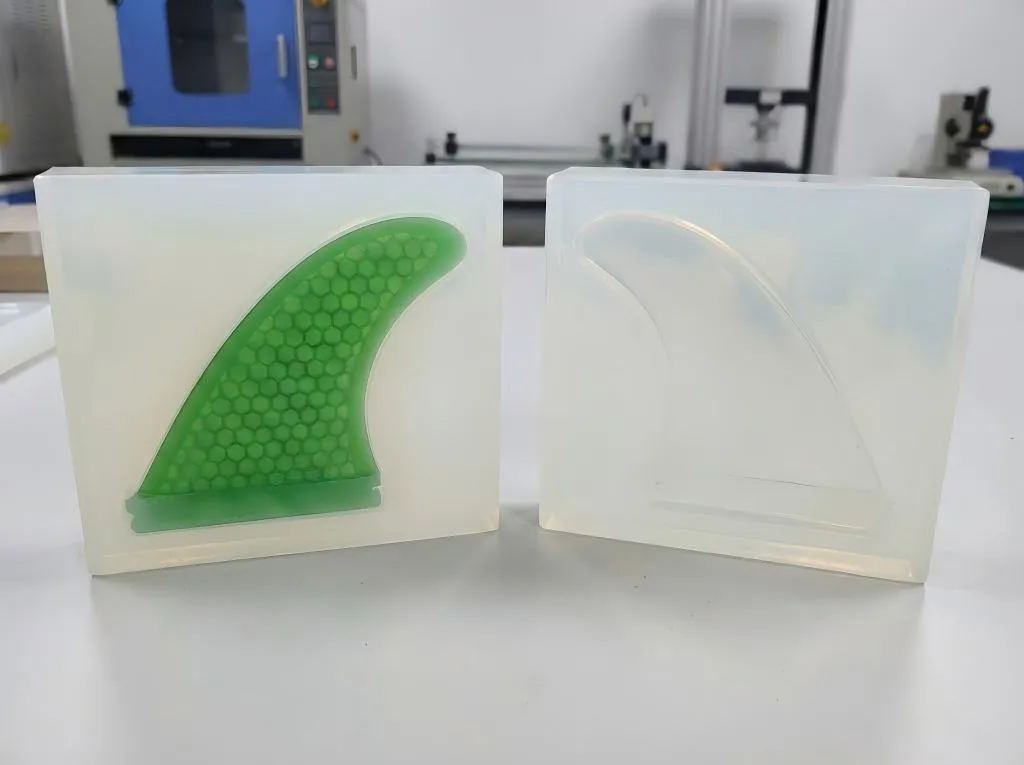
When customizing a fin template, you must pick a tooling method. Every factory will pitch you a different solution. However, you must choose based on your specific business model. Steel Molds are highly durable and very precise. In addition, they are perfect for massive global brands doing huge production runs. But, they are very expensive, often costing over $2,000 USD per shape.
Silicone Molds provide a flexible and affordable alternative. The tooling cost is just a fraction of steel. Furthermore, they are perfect for growing brands that want to test new shapes. As a result, you can launch Thrusters, Quads, and Keels with very low financial risk.
Graphic Applications: Cost vs. Aesthetics
Visual appeal directly drives retail sales. However, a completely indestructible graphic does not exist in surfing. Reefs and sand will eventually scratch any fin surface. Therefore, the goal is maximizing shelf appeal while being honest about physical realities.
Silk-Screen Printing is cheap and basic. But, it limits your color options and chips off easily upon impact. Consequently, it only works well for budget-friendly softboard fins.
Water Transfer Printing is the industry standard for premium fiberglass fins. It allows for unlimited colors, complex gradients, and full edge-to-edge coverage. Furthermore, we seal the graphics under a highly durable, UV-resistant clear coat. Ultimately, this high-end aesthetic easily justifies a $60+ retail price tag.
Resin, Cloth, and Foil Consistency
A fiberglass fin’s performance relies entirely on its internal build. High-end fins usually use a Hex-Core (honeycomb) to reduce weight. Then, factories wrap them tightly in fiberglass or carbon fiber.
Inconsistent weight happens when factories fail to control the resin ratio during molding. For instance, too much resin makes the fin heavy and brittle. Conversely, too little resin makes the fin weak and prone to snapping.
In addition, the fin’s foil (the trailing edge) requires careful human attention. You must ensure your factory uses skilled craftsmen for post-production. Specifically, hand-sanding removes flashing and ensures smooth water flow, which separates a pro-level fin from a cheap plastic toy.
Packaging Strategies for Air Freight
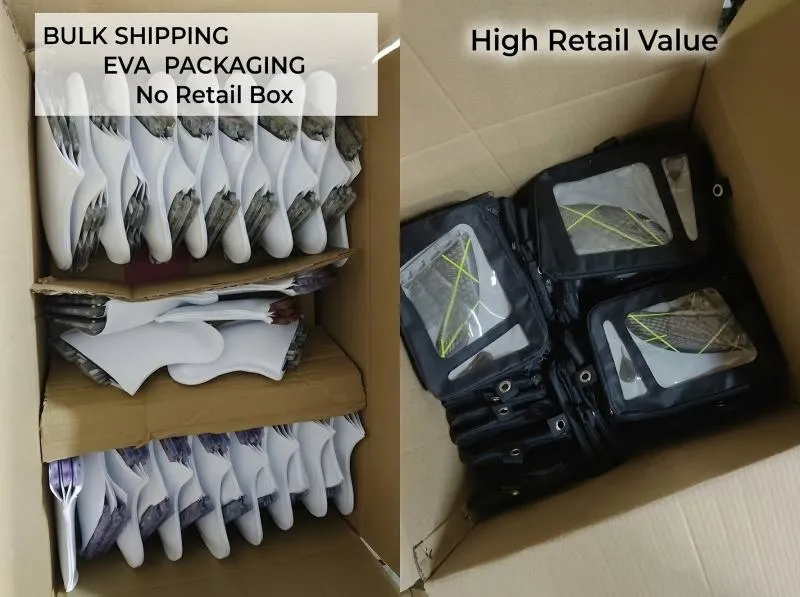
Packaging directly impacts your landed cost and brand perception. Surf hardware is heavy and dense. Furthermore, many brands use DDP air freight to restock inventory quickly. Therefore, you must optimize your volumetric weight. Depending on your profit strategy, you generally have two packaging choices:
- Standard White EVA Blocks: Fins sit securely inside die-cut white foam. This is very safe and highly cost-effective. Moreover, it keeps volumetric weight extremely low for air freight.
- Custom Fin Wallets or Boxes: You can choose premium zippered EVA bags or branded paper boxes. This raises the perceived value for retail shops. However, it increases your unit cost and cargo space.
A reliable factory will clearly explain how these packaging choices affect your final DDP shipping bill.
How to Vet a Surf Hardware Supplier
Sourcing custom fiberglass surf fins is really about finding a safe supply chain. You are not just buying resin; you are buying business security.
When vetting an OEM manufacturer, you must demand transparency. For example, do they offer standard EVA packaging to save you air freight money? Furthermore, are they willing to test fitment using your physical fin boxes?
Most importantly, ensure they sign a strict Non-Disclosure Agreement (NDA). A true B2B partner acts as your invisible background factory. Ultimately, Daywin Watersports never shows your private designs to competitors, so you can focus entirely on selling.
