Are Fiberglass Fins Better Than Plastic Fins?
Surfboard fins may look small, but they have a big influence on how a board feels in the water. For beginners, fins are often an afterthought. However, once a surfer starts turning harder and looking for more control, the difference between plastic fins and fiberglass fins becomes undeniable.
In this guide, we will explain the performance gap between these materials and why B2B buyers—like surf brands and manufacturers—should consider upgrading to custom fiberglass fins.
Do Surfboard Fin Materials Really Matter?
Yes, absolutely.
A surfboard fin controls more than direction; it affects hold, drive, release, and speed. * Plastic Fins: In small waves or at low speeds, they feel acceptable. But as water pressure builds, plastic tends to bend too much, leading to energy loss and a “delayed” feeling during turns.
- Fiberglass Fins: Designed to hold their shape under pressure. They provide a cleaner response and a more connected feeling with the board.
B2B Insight: Fin material directly affects customer experience. While low-cost fins reduce package costs, they can make a high-quality board feel unresponsive.
Why Are Plastic Surfboard Fins So Common?
Plastic fins are affordable and easy to mass-produce. They are the industry standard for:
- Beginner & Soft-top surfboards
- Rental boards and Kids’ boards
- Entry-level retail packages (supermarkets/beach shops)
While practical for first-timers, plastic fins have a performance ceiling. As surfers improve, they inevitably outgrow the “mushy” feel of plastic.
5 Reasons Fiberglass Surfboard Fins Beat Plastic Fins
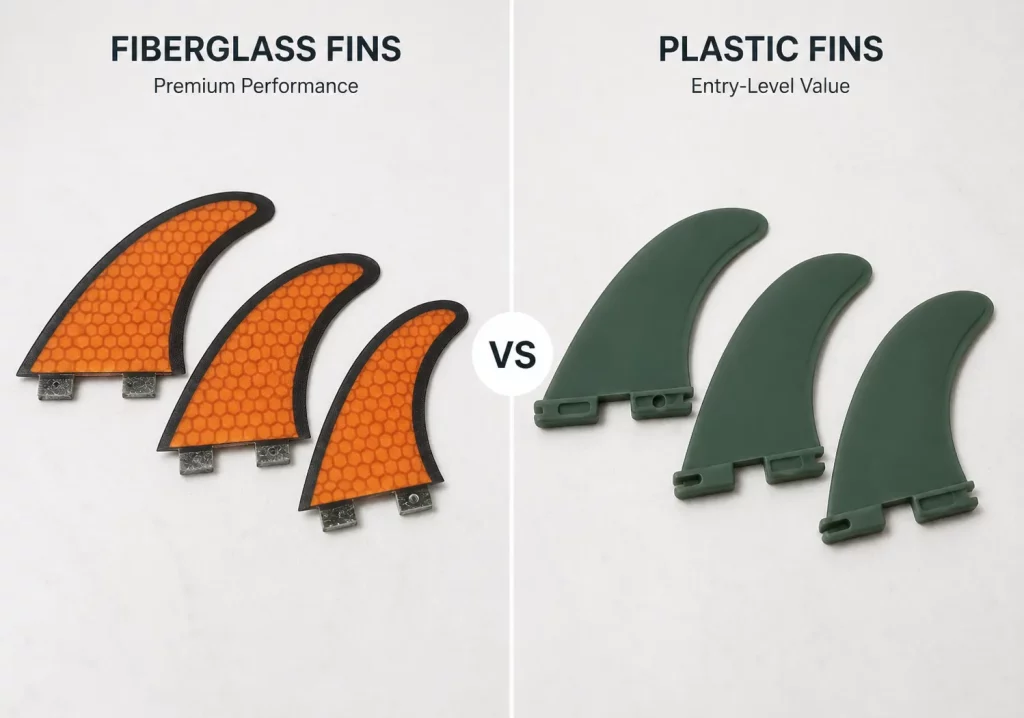
1. Better Stiffness for More Control
Fiberglass fins hold their shape when a surfer applies pressure during a bottom turn or cutback. This stability ensures the board tracks properly in stronger waves.
2. Faster Flex Response
Unlike plastic, which can feel “dead,” fiberglass has a “spring-back” quality. When the fin bends during a turn, it returns energy efficiently, making the board feel alive and snappy.
3. Stronger Hold Through Turns
Fiberglass maintains its integrity under load, providing a better grip on the wave face. This is crucial for steeper waves and performance shortboards.
4. Superior Durability
Fiberglass resists shape distortion over time. For surf schools or rental programs, this means the fins maintain their original performance profile much longer than plastic alternatives.
5. Higher Perceived Product Value
A board package with fiberglass fins feels premium. For brands, this justifies a higher retail price and allows for customization (logos, custom colors, matte/gloss finishes).
Quick Comparison: Fiberglass vs. Plastic
| Feature | Fiberglass Fins | Plastic Fins |
|---|---|---|
| Flex | Controlled & Predictable | Soft & Excessive |
| Response | Fast and “Springy” | Slower under pressure |
| Control | High Hold & Stability | Basic control |
| Best Use | Intermediate to Pro | Beginners & Kids |
| Brand Value | Premium / Professional | Entry-level / Budget |
| Customization | High (Logo, Color, Finish) | Very Limited |
When Should Your Brand Upgrade?
If you are a surf brand or distributor, consider switching to fiberglass when:
- Moving beyond entry-level: Plastic fins can weaken the image of a mid-to-high-tier board.
- Targeting intermediate surfers: These customers actively look for better “drive” and “hold.”
- Building a Private Label: Fiberglass allows for full OEM customization—your logo, your colors, your templates.
What to Check Before Ordering (B2B Buyer’s Checklist)
When sourcing fiberglass fins, pay attention to these technical details:
- Fin Template: Confirm the rake, height, and base length.
- Material Consistency: Ensure flex is uniform across production batches.
- Finish Quality: Choose between matte or gloss to match your board’s aesthetic.
- Packaging: Consider custom fin bags to enhance the unboxing experience.
How Daywin Watersports Can Help
Daywin Watersports specializes in supporting surf brands and manufacturers with high-quality custom fiberglass fins. We offer:
- Standard and custom templates (Twin, Thruster, Quad, Longboard).
- Full branding (Logo, custom colors, and marble effects).
- Flexible MOQ for test orders and bulk production.
Ready to upgrade your product line? Contact Daywin Watersports today to discuss your next private label project.
FAQ
Q: Are fiberglass fins better than plastic? A: Yes, for anyone beyond the absolute beginner stage. They offer better control, speed, and durability.
Q: Can fiberglass fins be customized? A: Absolutely. They are the preferred choice for OEM projects because they can be tinted, branded, and shaped to specific templates.
Q: Do they make the board faster? A: They don’t increase raw speed, but they transfer energy more efficiently, which helps surfers maintain speed through turns.
