How to Source Bodyboards for Retail Chains Without Costly Mistakes
For retail chains, supermarkets, beach shops, and distributors, bodyboards are more than summer beach products. They are seasonal retail items. They must look good in stores, arrive in good condition, scan correctly, and meet the right price point.
That is why bodyboard sourcing should not start with price only.
A low unit price may look attractive at first. However, hidden problems can appear later. Weak bonding, poor printing, wrong barcodes, damaged cartons, or late delivery can all increase the real cost.
For retail buyers, a successful bodyboard program depends on several details working together. Size, material, artwork, packaging, carton strength, quality control, and delivery timing all matter.
This bodyboard sourcing checklist is written for B2B buyers who source bodyboards for retail chains, supermarkets, beach shops, distributors, and private label programs.
Daywin Watersports supplies OEM bodyboards and surf accessories for surf brands, distributors, retail chains, supermarkets, and other watersports product buyers. Bodyboard options can include EPS core, XPE deck, HDPE slick bottom, 33 inch kids bodyboards, 41 inch standard bodyboards, and PDQ retail display support.
Direct Answer: What Should Retail Buyers Check Before Sourcing Bodyboards?
Before placing a bulk bodyboard order, retail buyers should confirm the sales channel, product size, core material, deck material, slick bottom, artwork, logo, packaging, barcode labels, carton marks, MOQ, sample process, quality control standard, shipping terms, and target delivery date.
In addition, supermarket and retail chain buyers should pay close attention to packaging and display planning. A bodyboard must be easy to receive, display, scan, sell, and replenish.
A reliable OEM bodyboard supplier should do more than provide a unit price. The supplier should help buyers check whether the product, packaging, carton plan, and delivery schedule fit the target retail market.
1. Start With the Retail Channel
Different retail channels need different bodyboard specifications.
In a supermarket program, price, barcode accuracy, packaging, and fast display often matter most. Beach shops, however, may care more about graphics, colors, and seasonal shelf appeal. Distributors also need stable supply and a practical size range. Private label brands usually focus on logo placement, custom artwork, and packaging consistency.
| Retail Channel | Main Buying Priority | Sourcing Focus |
|---|---|---|
| Supermarkets | Price, barcode, packaging, display | Retail-ready packaging and PDQ display |
| Beach shops | Color, graphics, seasonal appeal | Attractive design and stable quality |
| Distributors | Product range and replenishment | Multiple sizes and repeat supply |
| Surf shops | Product feel and brand image | Better finish and visual details |
| Private label brands | Customization and consistency | Logo, color, artwork, packaging |
Before asking for a quote, define where the bodyboards will be sold. As a result, the supplier can recommend the right size, material, packaging, and carton plan.
2. Choose the Right Bodyboard Size
Bodyboard size affects the target user, retail price, display space, packing volume, and shipping cost.
Common retail sizes include kids’ sizes and standard recreational sizes. For example, many retail programs use 33 inch kids bodyboards or 41 inch standard bodyboards.
| Size | Typical User | Suitable Channel |
|---|---|---|
| 33 inch | Kids and entry-level users | Supermarkets, beach shops, promotional programs |
| 37 inch | Youth and general recreational users | Distributors, beach shops, seasonal retailers |
| 41 inch | Standard recreational users | Retail chains, beach shops, sports product buyers |
For supermarket programs, a simple size range is often easier to manage. It also makes display and inventory control easier. For a first order, one or two proven sizes may be better than too many options.
On the other hand, distributors may need a wider size range if their market already has stable demand.
3. Confirm the Core Material
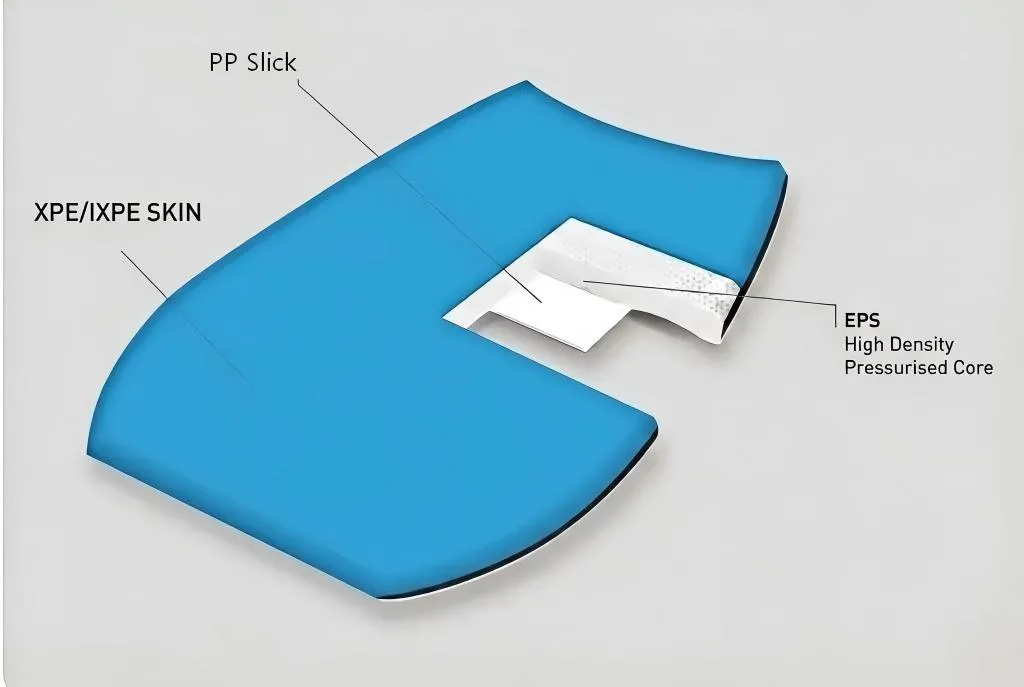
The core affects weight, buoyancy, stiffness, durability, and cost.
For many recreational retail bodyboards, EPS core is a common choice. It is lightweight and suitable for summer beach use. It also works well for entry-level and family markets.
Before confirming the order, the quotation should clearly state:
- Core material
- Product size
- Target user group
- Approximate product weight
- Sample standard
- Mass production standard
Avoid vague terms such as “good quality core.” In B2B sourcing, clear material details are more useful than general quality claims.
If the order is for a retail chain, consistency is important. Therefore, the sample and bulk production should follow the same approved standard.
4. Review the XPE Deck
The deck is the top surface of the bodyboard. It is one of the first things customers see in stores.
For retail products, appearance matters. A board with bubbles, peeling, color difference, or poor printing may look unattractive on the shelf. This can hurt sales even when the basic structure is acceptable.
Important deck details include:
- Surface texture
- Color consistency
- Print clarity
- Logo position
- Edge finishing
- Lamination strength
- Risk of bubbles or peeling
During sample approval, review the deck under normal lighting. Also, compare the sample with the artwork and color reference. The final sample should represent the expected production standard.
5. Check the HDPE Slick Bottom
The slick bottom is the underside of the bodyboard. It affects both appearance and basic water performance.
HDPE slick bottom is common for retail bodyboards. However, buyers still need to check the finish carefully.
For bulk sourcing, review these details:
- Bottom surface flatness
- Wrinkles or bubbles
- Scratches or marks
- Edge bonding
- Color consistency
- Print alignment, if printed
- Match between sample and production
A clean slick bottom gives the product a better retail appearance. It also helps reduce complaints caused by visible defects.
For large orders, slick bottom quality should be checked before packing. In addition, production photos can help buyers confirm the finished look before shipment.
6. Prepare Artwork, Logo, and Printing Files Early
Bodyboards are visual products. For supermarkets, beach shops, and seasonal retailers, color and graphics can strongly affect shelf appeal.
Before sampling, prepare clear artwork details:
- Logo file
- Graphic design file
- Color reference
- Print position
- Product size
- Packaging artwork
- Barcode file
- Warning label content, if needed
- Retail label requirements
If the final artwork is not ready, confirm the printable area first. Also, ask the supplier which file format is needed. This helps avoid delays during sample development.
For private label orders, logo position and color accuracy should be approved on the sample before mass production.
7. Plan Retail-Ready Packaging
Packaging is one of the biggest differences between a simple wholesale order and a retail-ready bodyboard program.
For supermarkets and retail chains, packaging must support store display, barcode scanning, warehouse receiving, customer handling, and carton protection.
| Packaging Type | Suitable Use | Buyer Benefit |
|---|---|---|
| Polybag | Basic wholesale or low-cost programs | Simple protection and lower cost |
| Color paper on product | Retail presentation | Better shelf appeal |
| Shrink wrap | Clean product appearance | Keeps the board tidy |
| PDQ display | Supermarkets and retail chains | Faster seasonal display |
| Custom carton | Export and warehouse handling | Easier shipping and receiving |
Packaging should be discussed before sampling. It affects barcode position, product presentation, carton size, loading quantity, and final store execution.
More importantly, the packaging should match the sales channel. A supermarket program may need barcode-ready packaging and PDQ display. A distributor may care more about carton strength and packing efficiency.
8. Confirm Barcode, SKU, and Carton Marks
For retail chain buyers, barcode and carton information are critical. They affect warehouse receiving, store distribution, checkout scanning, and inventory control.
Retail information should include:
- Barcode
- SKU number
- Product name
- Product size
- Color or design code
- Country of origin
- Inner carton quantity
- Master carton quantity
- Carton mark
- Retail label position
- Warning label, if needed
These details should be confirmed during packaging design and sample approval. Waiting until shipment can create delays.
For supermarket programs, every product and carton should match the buyer’s internal system. As a result, the goods can move through the warehouse and stores more smoothly.
9. Decide Whether You Need PDQ Display
PDQ display is useful for seasonal bodyboard programs. It helps stores place products on the sales floor quickly.
For supermarkets and retail chains, this can reduce store handling time. It can also improve product presentation during the summer season.
However, PDQ display planning must stay simple and controlled.
For bodyboards, one PDQ display should normally use one size and one SKU. Mixing different sizes in the same PDQ is not recommended. It can create problems with display balance, barcode control, replenishment, and inventory accuracy.
PDQ display details should include:
- Display size
- One bodyboard size per display
- One SKU per display
- Number of boards per display
- Graphic panel design
- Barcode and product information
- Carton strength
- Stacking method
- Shipping protection
A good PDQ display is not only attractive. It also needs to be practical for warehouse handling, store display, and customer shopping.
10. Confirm MOQ and Size Mix
MOQ affects both cost and flexibility.
For new retail programs, a lower MOQ can help buyers test the market. For mature channels, higher quantities may improve unit cost and production efficiency.
The quotation should clearly state:
- MOQ per size
- MOQ per design
- MOQ per color
- Whether different sizes can ship together
- Whether different colors can ship together
- Custom packaging MOQ
- Sample cost
- Sample lead time
- Bulk production lead time
Size mix can work at the shipment level. However, each SKU should be managed clearly. For retail packaging and PDQ display, avoid confusing combinations that make warehouse and store handling harder.
11. Do Not Skip Sample Approval
For OEM bodyboard orders, sample approval is essential.
Photos can show the general appearance. However, they cannot fully show material feel, stiffness, print quality, surface finish, packaging strength, or carton details.
During sample approval, check:
- Product size
- Core material
- Deck surface
- Slick bottom
- Printing color
- Logo position
- Edge finishing
- Packaging method
- Barcode and label
- Carton information
After approval, the supplier should keep the confirmed standard for production comparison.
For retail chain programs, it is also useful to approve both the product sample and the packaging sample. This reduces the risk of changes during mass production.
12. Set a Clear Quality Control Standard
Retail programs often involve larger quantities and many store locations. Therefore, a small quality issue can become a larger business problem.
A practical bodyboard QC checklist should include:
| QC Area | What to Check |
|---|---|
| Size | Length, width, thickness |
| Surface | Scratches, dents, stains |
| Deck | Bubbles, peeling, color difference |
| Bottom | Flatness, bonding, wrinkles |
| Printing | Color, clarity, position |
| Edge | Smoothness and finishing |
| Packaging | Barcode, label, artwork |
| Carton | Carton mark, quantity, strength |
| SKU control | Correct size, design, and packaging |
For large orders, buyers can request pre-shipment photos, inspection records, or third-party inspection.
The goal is not only to check the finished product. Instead, the goal is to make sure the approved sample standard is followed during production.
13. Review Carton Strength and Loading Details
Some bodyboards pass factory inspection but arrive with damaged corners, crushed packaging, or deformed cartons. In many cases, this comes from weak carton planning or poor loading protection.
Before shipment, review:
- Pieces per carton
- Carton size
- Carton material
- Carton strength
- Corner protection
- Carton marks
- Loading method
- Estimated container quantity
- Protection for PDQ display cartons
For retail buyers, carton quality affects more than shipping. It also affects warehouse receiving, store distribution, and the final condition of the product on the shelf.
If PDQ displays are used, confirm their packing method carefully. The display should arrive ready for retail handling.
14. Confirm Shipping Terms and Delivery Timing
Bodyboards are seasonal products. Delivery timing is critical.
If goods arrive after the main summer sales window, even a well-made product can become slow-moving inventory.
Before production, confirm:
- FOB, CIF, or DDP terms
- Loading port
- Destination port or warehouse
- Carton volume
- Estimated container quantity
- Production lead time
- Shipping schedule
- Target in-store date
For retail chains, work backward from the target store launch date. This helps define the latest production and shipping schedule.
If the buyer needs DDP shipping support, confirm the delivery address and service scope during quotation. This avoids confusion later.
15. Choose a Supplier With Retail Program Experience
A factory that can make a bodyboard is not always the right supplier for retail chain orders.
Retail programs need more than production. The supplier must also manage packaging, barcodes, cartons, inspection, and delivery.
A suitable OEM bodyboard supplier should support:
- OEM customization
- Multiple bodyboard sizes
- Logo and artwork customization
- Retail-ready packaging
- Barcode and carton mark coordination
- PDQ display support
- Sample approval
- Quality control
- Export shipping support
- Clear B2B communication
For buyers sourcing several watersports products, working with one OEM supplier can also simplify product development. In addition, it can reduce communication time across bodyboards, surfboard fins, leashes, traction pads, fin boxes, and iSUP components.
Bodyboard Sourcing Checklist for Retail Buyers
Use this checklist before confirming a bulk bodyboard order.
| Category | Details to Confirm |
|---|---|
| Retail channel | Supermarket, beach shop, distributor, surf shop, private label |
| Size | 33 inch, 37 inch, 41 inch, or custom size |
| Core | EPS core or required material |
| Deck | XPE deck, surface finish, print quality |
| Bottom | HDPE slick bottom, bonding, flatness |
| Design | Logo, artwork, color, print position |
| Packaging | Polybag, color paper, shrink wrap, PDQ display |
| Labeling | Barcode, SKU, carton mark, retail label |
| MOQ | Per size, per color, per design |
| Sample | Product sample and packaging sample |
| QC | Size, surface, lamination, printing, carton |
| Shipping | FOB, CIF, DDP, carton volume, delivery date |
| Supplier | OEM experience, retail support, quality control |
Common Sourcing Mistakes to Avoid
Choosing by Unit Price Only
The lowest price is not always the lowest cost. Poor packaging, unstable printing, damaged cartons, or late delivery can cost more than the original savings.
Confirming Packaging Too Late
Packaging affects barcode placement, carton size, display method, and retail presentation. For this reason, it should be planned during the sample stage.
Skipping Physical Samples
Photos are useful, but they cannot replace physical samples. Material, stiffness, surface finish, printing, and packaging should be checked before mass production.
Mixing PDQ Display Sizes
For bodyboard PDQ displays, keep one size and one SKU per display. Mixing sizes can make display, scanning, replenishment, and inventory control more difficult.
Ignoring Carton Details
Carton strength, carton marks, and packing quantity affect warehouse receiving and store distribution. These details should be part of the sourcing discussion.
FAQ
What should retail buyers check before sourcing bodyboards?
Retail buyers should check size, core material, deck material, slick bottom, printing, packaging, barcode labels, carton strength, MOQ, sample approval, quality control, and shipping terms.
What is a common bodyboard size for retail programs?
Common retail bodyboard sizes include 33 inch kids bodyboards and 41 inch standard bodyboards. The best size depends on the target customer, retail channel, and price point.
What materials are commonly used for retail bodyboards?
Many retail bodyboards use EPS core, XPE deck, and HDPE slick bottom. This structure is suitable for many recreational beach and seasonal retail programs.
Why is packaging important for bodyboard sourcing?
Packaging affects product protection, shelf presentation, barcode scanning, warehouse receiving, and store display. Therefore, retail buyers should confirm packaging before mass production.
Can different bodyboard sizes be mixed in one PDQ display?
For PDQ display, it is better to use one bodyboard size and one SKU per display. Mixing sizes can create problems with display balance, barcode control, replenishment, and inventory accuracy.
Can bodyboards be customized with logo and artwork?
Yes. OEM bodyboards can be customized with brand logos, colors, printed graphics, packaging artwork, and retail labels. Buyers should provide artwork files before sampling.
How can buyers reduce quality problems in bulk bodyboard orders?
Buyers can reduce risk by approving samples, confirming material details, setting packaging standards, checking cartons, and arranging pre-shipment inspection if needed.
What information is needed for a bodyboard quote?
A clear quote request should include size, quantity, material preference, artwork, packaging needs, barcode needs, shipping destination, and expected delivery date.
Planning a retail-ready bodyboard program for supermarkets, beach shops, distributors, or seasonal retail channels?
Contact Daywin Watersports to discuss bodyboard size options, EPS/XPE/HDPE material structure, custom graphics, retail packaging, PDQ display, MOQ, and shipping support for your market.
